roofing
Roof Replacement in Canton, GA
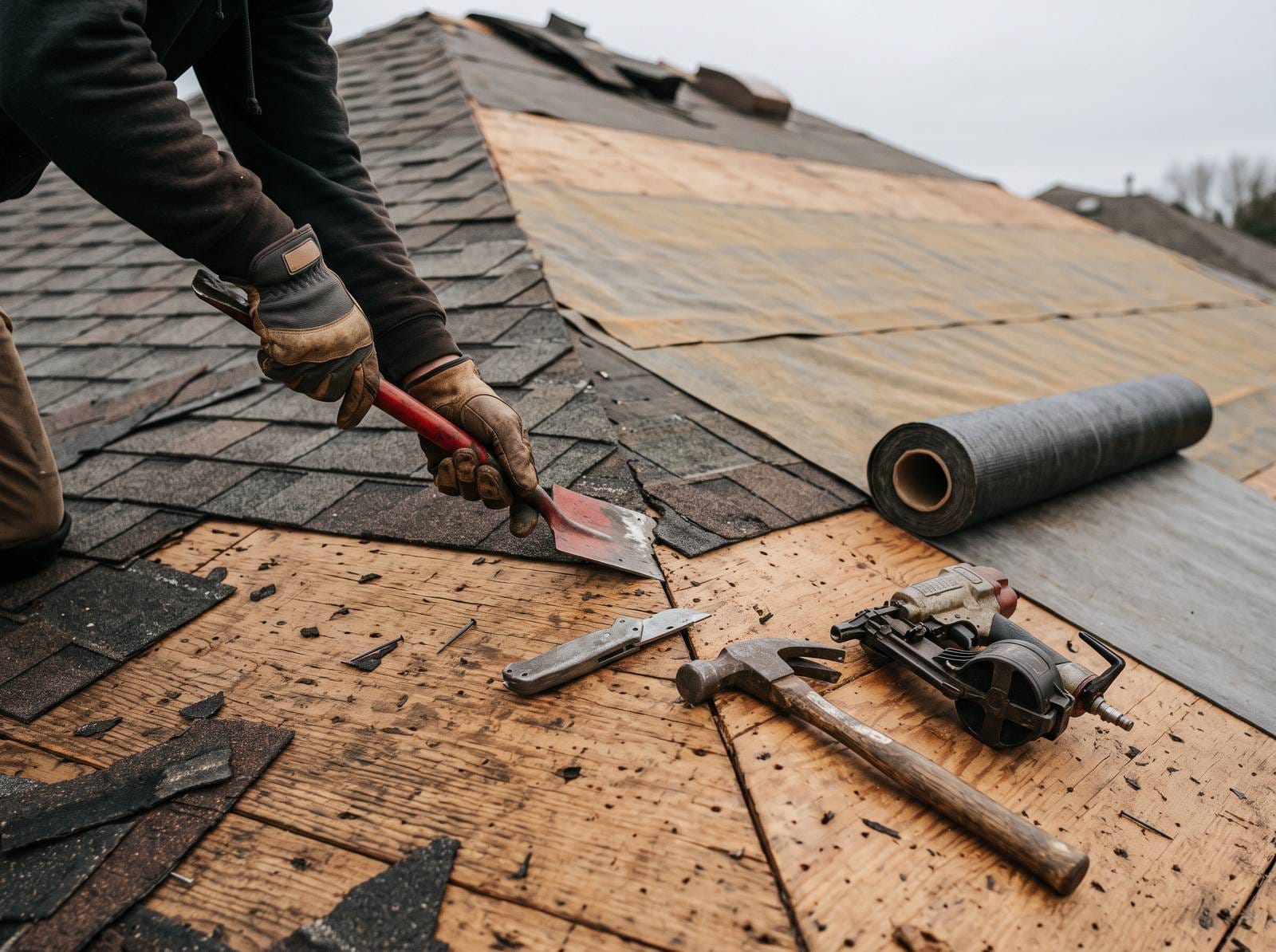
A full replacement is a tear-off down to the decking, not a layover, and the difference shows up eight years later. We replace bad decking at the rate we actually find it, install the code-required underlayment and drip edge, and hand you a ten-year workmanship warranty with the exclusions printed on it. Most residential roofs are one day.
Filing on this? What we do and do not do in an insurance claim — including the one thing Georgia law does not allow anybody to offer you.
What we actually do on this job
- Complete tear-off of every existing layer, down to the deck
- Decking replaced at the rate we find it, priced per sheet and shown to you before it goes on
- Synthetic underlayment across the field, and ice-and-water membrane in the valleys and at penetrations
- New drip edge at eaves and rakes
- New pipe boots, and new step and counter flashing at every wall and chimney
- Ridge ventilation sized to the attic, with the intake checked rather than assumed
- Permit pulled and the county or city final inspection scheduled
- Magnet sweep of the drive, the lawn and the beds before anyone leaves
Materials and systems
- Architectural asphalt shingle
- The default on most homes here and what the overwhelming majority of the stock already has. Heavier, thicker and more wind-resistant than a three-tab, and it carries the manufacturer's own written material warranty as a separate document from ours.
- Designer and impact-rated asphalt
- Heavier laminates and impact-rated products. Worth a conversation in a hail market, and worth asking your agent about before you buy — some carriers price impact-rated roofs differently and some do not, and we are not the ones who can tell you which yours is.
- Synthetic underlayment and ice-and-water membrane
- Synthetic across the field rather than felt. Self-adhering membrane in the valleys, around every penetration, and at the eave where the code calls for it. This is the layer nobody sees and the one that decides whether a wind-driven rain finds its way in.
How it goes
01
Measure, photograph, and write it down
Your project manager gets on the roof, measures it, photographs every slope and every penetration, and writes a scope with line items. You get the same document we work from.
02
Deliver to the driveway, not the lawn
Material lands on the drive on plywood, not on the grass. It is a small thing that says a great deal about how the rest of the job will go.
03
Tear off, inspect the deck, rebuild
Everything comes off before anything goes on. Rotten or delaminated decking is photographed, replaced, and added to the invoice at the rate on your contract — not renegotiated on the day.
04
Final inspection, registration, warranty
The county or city final is scheduled, the manufacturer's material warranty is registered within forty-eight hours, and the ten-year workmanship warranty goes in your hand.
Can you not just go over the top of the old one?
Physically, on many roofs, yes — a single layover over one existing layer is legal in a lot of places and it is cheaper. We do not do it, and here is the honest reason rather than the sales one: a layover hides the deck. You cannot inspect what you have covered, so you find out about the soft sheathing and the rotten fascia when the second roof fails instead of when the first one comes off. It also adds weight, it runs hotter, and it makes the next tear-off two layers deep. If price is the constraint, we would rather talk to you about financing than sell you a roof we would not put on our own house.
The ten-year workmanship warranty
10 years from the date of final inspection. Transferable once, to the buyer, if you sell the home — at no charge, and with no form to buy.
Covered
- Leaks caused by how we installed the roof — fastening, flashing, valley and penetration detail, underlayment, ridge and eave detail
- The interior damage that our leak caused: if water gets in because of our work, we come back and fix the roof and we fix what it ruined underneath
- Re-detailing anything we installed that has failed because of the way we installed it, for the full term
Not covered
- The shingles themselves — those carry the manufacturer's own written warranty, which is a separate document with separate terms
- Damage from a later storm, hail, or wind event
- Impact damage, including a tree or a limb
- Foot traffic, including anyone else's
- Structural movement of the building
- Ice damming on a roof pitched below the system's rated minimum slope
- Work performed by anyone else after us, on any part of the assembly
- Anything on a roof we did not install
Two documents, not one. Ours covers our work for ten years. The manufacturer's covers their product for whatever term and under whatever conditions they set — we register it within forty-eight hours of the final inspection and give you the registration, but we did not write it and we cannot change it.
The full written terms are part of your contract. They are handed to you at completion, and we will email you a copy any time you ask.
Questions about roof replacement
How long does a roof replacement take?
Most residential replacements are one day. Complicated geometry, a steep pitch, or a lot of decking replacement can make it two. We tell you which one yours is before we start, not at four in the afternoon on day one.What actually changes the price?
Squares — the measured area — then pitch, the number of penetrations and valleys, how many layers have to come off, the decking we find underneath, and the system you choose. Access matters too: a house you can back a dump trailer up to is cheaper to strip than one on a long, tight drive.Layover or tear-off?
Tear-off, on our jobs. A layover covers the deck, which means nobody inspects the thing most likely to be the actual problem, and it makes the next replacement a two-layer strip. It is cheaper today and more expensive over the life of the house.Do I need a permit?
In most of where we work, yes for a replacement, and we pull it and it is in the price. The honest complication is that Georgia deletes the permit chapter of the residential code entirely, so every answer is local and they differ — Cherokee County has not published one either way for a re-roof, and its own instruction is to email and ask. We do that and put the answer in your file.What does the ten-year workmanship warranty actually cover?
Leaks caused by how we installed the roof, and the interior damage such a leak causes. Not the shingles themselves — those carry the manufacturer's own separate written warranty — and not a later storm. The full scope, the exclusions and the transfer terms are put in front of you before you sign, and they are in your contract.
Free inspection
Request an inspection window
Three steps — four if there has been a storm. About ninety seconds.
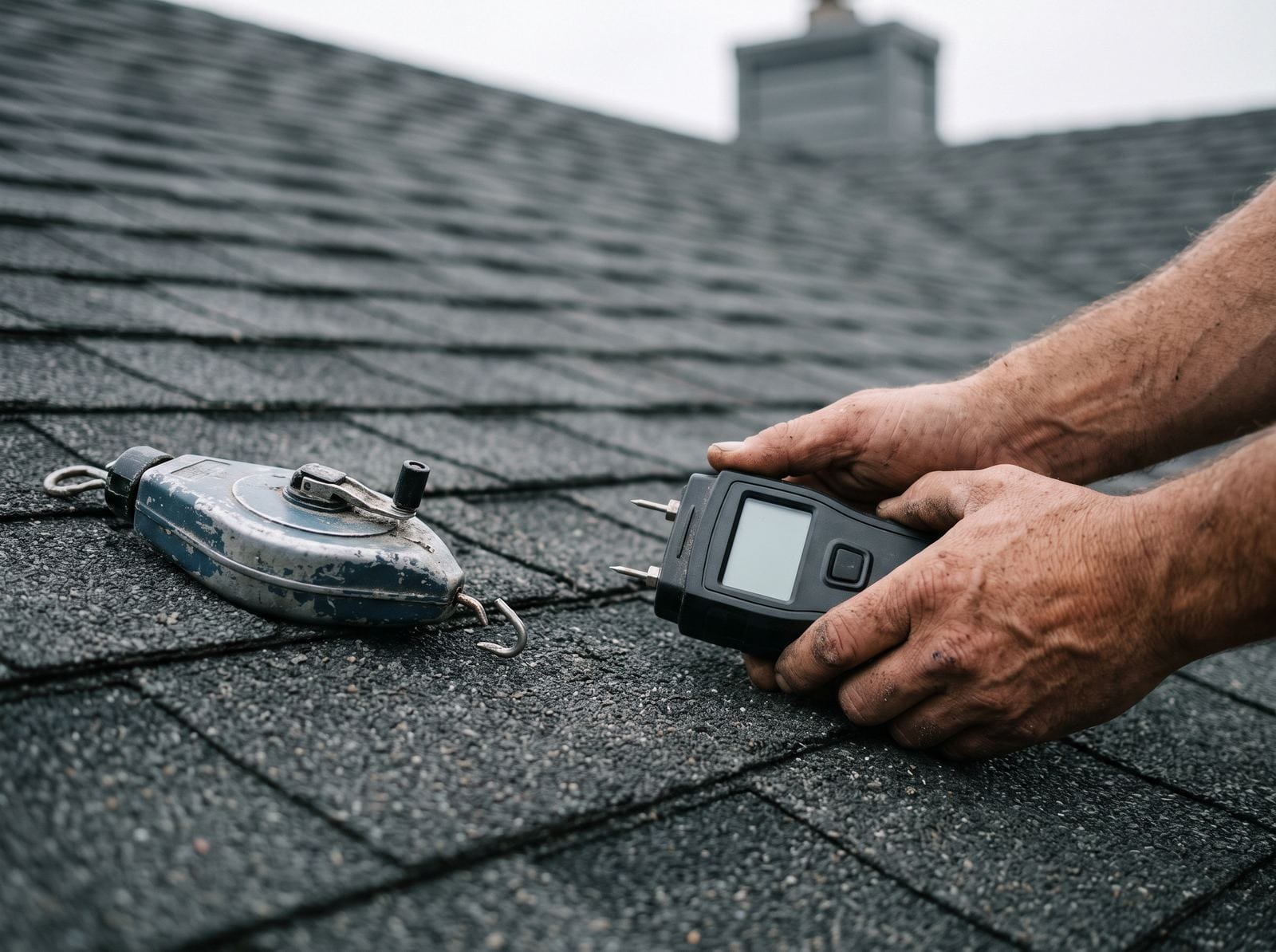
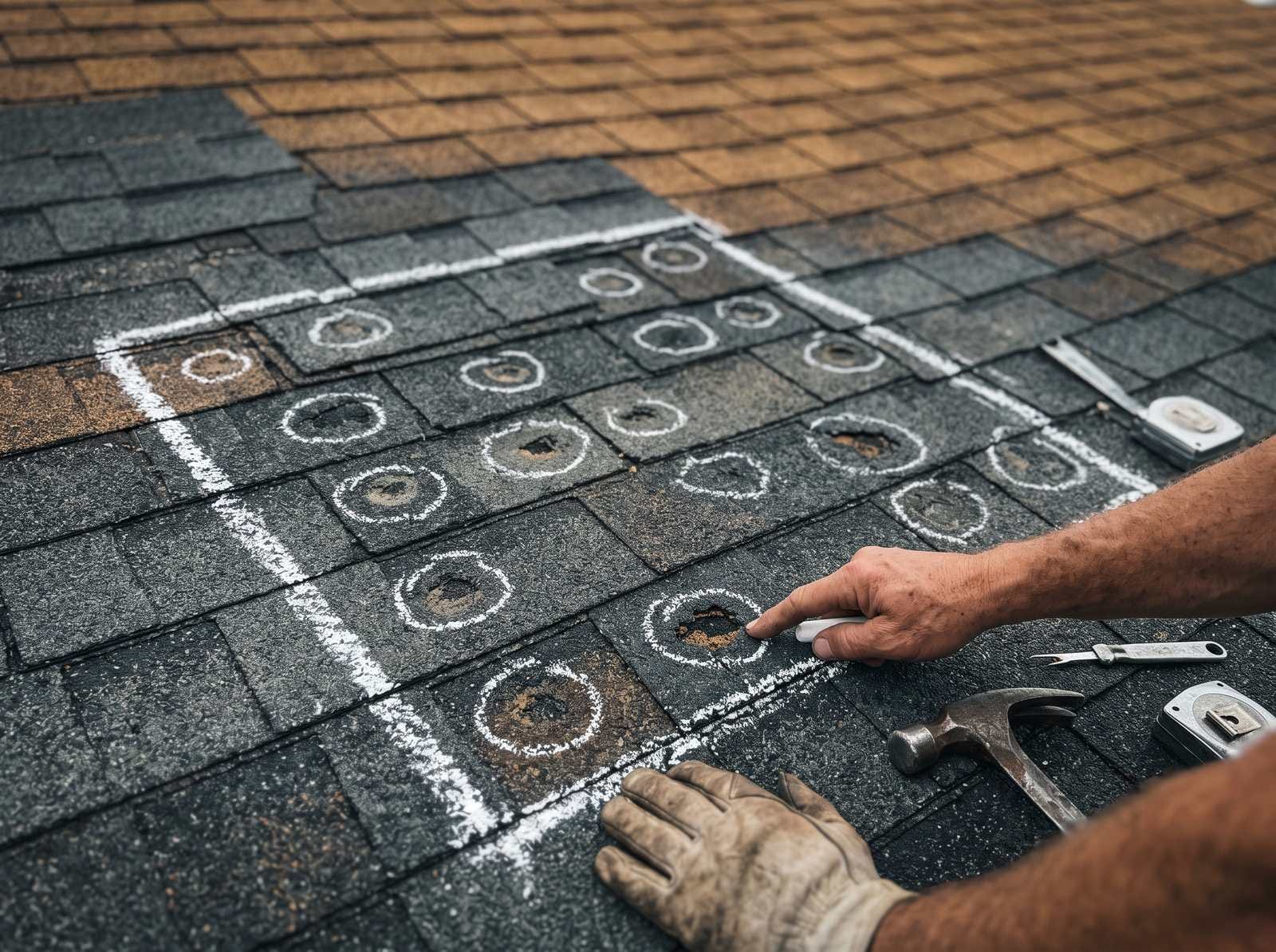
Get on the roof and know for sure.
Forty-five minutes, dated photographs, a written answer, and no obligation of any kind.